EASY HIKES IN PARADISE
A SUBALPINE MEADOW
ON MOUNT RAINIER NATIONAL PARK
|
Mount Rainier National Park covers 242,000 acres in north central Washington state. The Park is accessible from the south on US 12, an east-west 2-lane highway that crosses the United States sometimes coinciding with the Interstate system. This is a summertime park, all roads are closed from mid-October to late May with the exception of the road from Longmire to Paradise as weather permits. The National Park Inn at Longmire is open to guests all year. Pets are not permitted on the trails, on the snow, or in the wilderness. Established in 1899, the Park hosts two million visitors every year. Trails lead through dense forests to pristine lakes and ancient glaciers. The mountain is 14,410 feet high and bears upon it slopes 40 square miles of glaciers that originate at the summit in 26 rivers of ice.
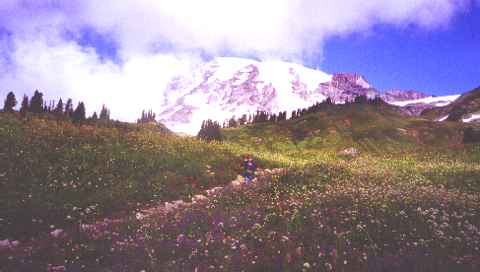
Paradise is 5,400 feet in elevation, hardly higher than Denver but the spectacularly lush forests and meadows burst with wildflowers as no other place accessible by auto. It is the most heavily visited area in the park. The Ohanapecosh Visitor Center is on highway 123 at the southeast corner of the Park. The highway goes northward across the eastern side of the Park clinging to the mountainside as it runs from the southeast corner to the northeast corner of the Park providing breathtaking scenery along the way. Drive into the Sunrise area, 6400 feet above sea level, the highest point in the Park reachable by car. Hiking and horseback riding are popular in the summer. The Wonderland Trail circles the peak with 90 miles entering remote areas with shelters along the way. The hike can be completed in a week to 10 days. Nine miles a day is brisk hiking on rough mountain trails. I can only dream of making such a trip. Snowshoeing, skiing, and tubing around Paradise are popular activities in winter. Experience a drive through the winter landscape to see scenery transformed by tremendous snowfalls.
|
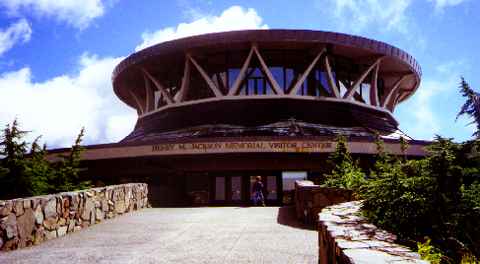
The Henry M. Jackson Memorial visitor center at Paradise
| Geology and history of the Cascade mountain range are graphically shown in the visitor center at Paradise. New displays are added as funds permit. Films and interpretative talks are scheduled frequently. Nature walks and talks with guides are available. |
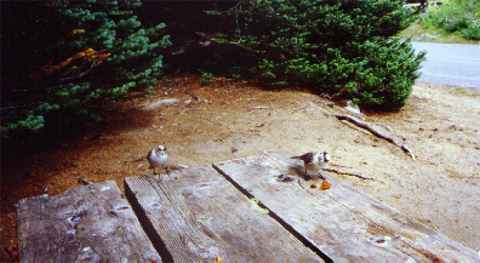
Gray jays, originally called Clark's Nutcrackers, found leftovers in picnic
area
|
A delightful place to picnic when traveling with children because the wildlife - jays and chipmunks - scamper in and out of bushes to entertain. Several short hikes suitable for families originate at the visitor centers. Pets are not permitted on the trails. To learn more about opportunities visit Mount Rainier on the web. |
Naomi Sherer
Copyright 1997 - 2003
SalmonRiverPublishing
All rights reserved